

Product Description
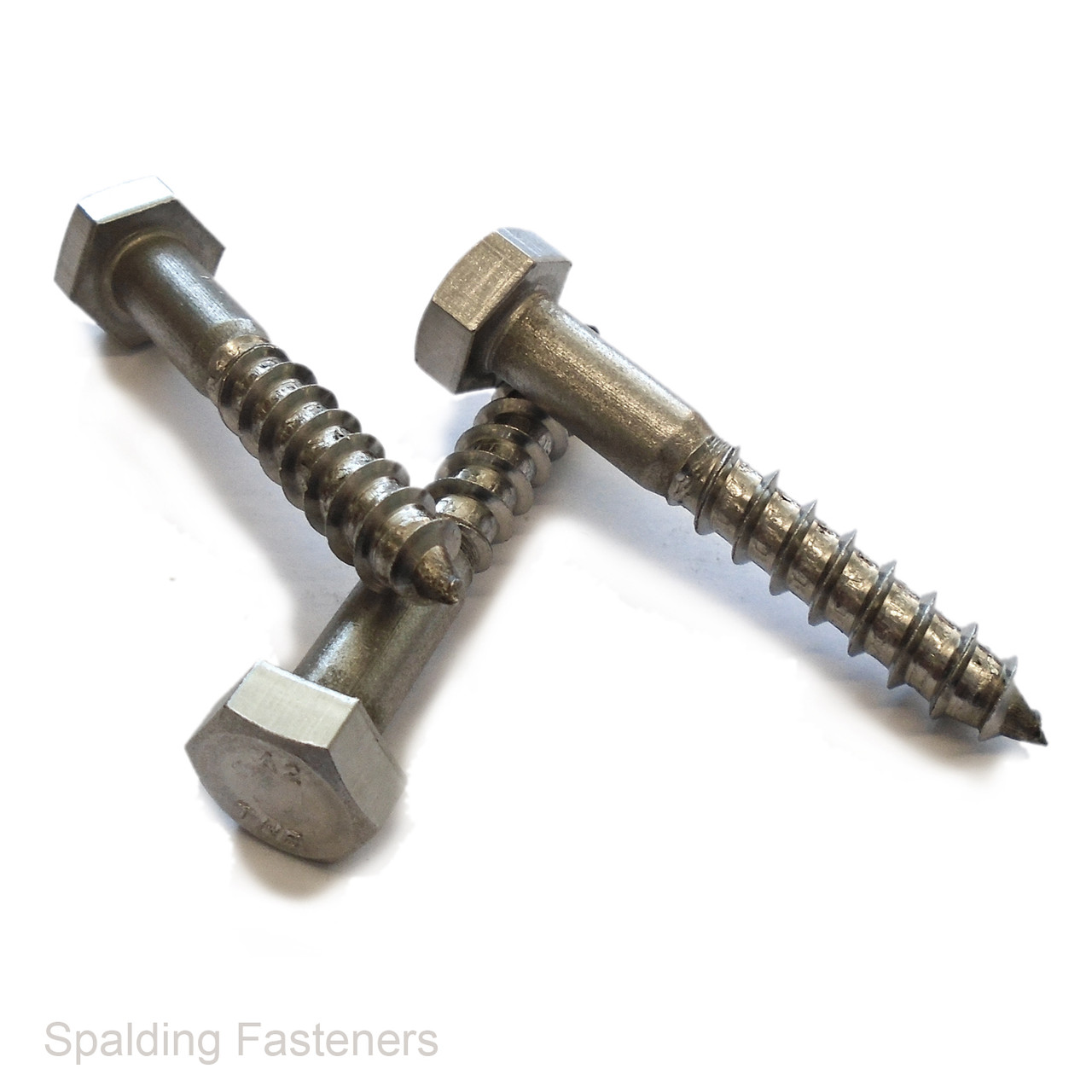
M8 A2 Stainless Steel Coach Screws – DIN 571 Hex Head Wood Screws
M8 coach screws manufactured from A2 stainless steel to DIN 571. Also known as lag screws or lag bolts, these fixings feature a hexagon head and a coarse wood screw thread for fastening into timber.
The hexagon head accepts a 13mm spanner or socket, making these screws suitable for securing brackets, fittings and timber components. Available in lengths from 25mm to 150mm, with A2 stainless steel providing corrosion resistance for general indoor and outdoor applications.
Technical Specifications
| Nominal Screw Diameter | 8mm |
|---|---|
| Listed Size | M8 |
| Material | A2 stainless steel |
| Standard | DIN 571 |
| Head Style | Hexagon head |
| Spanner or Socket Size | 13mm |
| Head Width Across Flats | 12.57–13.00mm |
| Head Height | 5.13–5.88mm |
| Plain Shank Diameter | 7.42–8.00mm |
| Thread Type | Coarse wood screw thread |
| Point Style | Pointed |
| Length Measurement | Measured from beneath the head to the tip |
Available Sizes
| Nominal Diameter | Screw Length | Spanner Size |
|---|---|---|
| 8mm | 25mm | 13mm |
| 8mm | 30mm | 13mm |
| 8mm | 40mm | 13mm |
| 8mm | 45mm | 13mm |
| 8mm | 50mm | 13mm |
| 8mm | 60mm | 13mm |
| 8mm | 65mm | 13mm |
| 8mm | 70mm | 13mm |
| 8mm | 75mm | 13mm |
| 8mm | 80mm | 13mm |
| 8mm | 90mm | 13mm |
| 8mm | 100mm | 13mm |
| 8mm | 120mm | 13mm |
| 8mm | 130mm | 13mm |
| 8mm | 140mm | 13mm |
| 8mm | 150mm | 13mm |
Select your required screw length and pack quantity from the options above. The M8 size identifies the nominal screw diameter; these screws have a wood screw thread and do not accept an M8 machine-thread nut.
Fitting Information
Drill a suitable pilot hole before installation, selecting the hole size and depth to suit the timber and screw. Allow adequate clearance for the plain shank where required, and position fixings with sufficient distance from timber edges and ends to reduce splitting.
Drive using a 13mm spanner or socket. A suitable washer beneath the head can help spread the bearing load. Tighten steadily without overtightening or crushing the timber, and choose a length that provides sufficient thread engagement in the receiving timber.


